[ad#ad-alex]
Tra le sue funzionalità chiavi troviamo la connettività cloud, grazie alla quale è possibile immagazzinare in tutta sicurezza giochi, documenti e dati di qualsiasi tipo su un server remoto e accedervi velocemente in ogni momento. Al momento Dell non ha rilasciato molti dettagli sul suo funzionamento (soprattutto su come controllarlo) ma prevede di lanciarlo sul mercato entro l’estate, ad un prezzo ancora sconosciuto. A seguire trovate il comunicato stampa ufficiale.
Ultra-Compact Dell Cloud Connection Device Enables Access to Personal and Professional Content From Any Capable Display
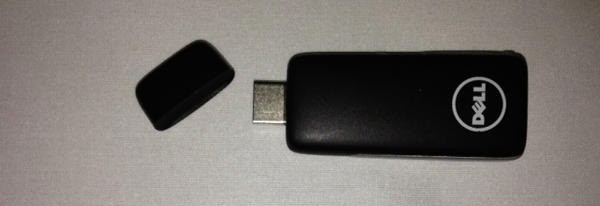
LAS VEGAS, Jan. 8, 2013 – Dell today unveiled a solution that extends the value of cloud client computing to the next level, enabling people to manage the increasing convergence of their work lives and personal lives by using a compact, portable device to access not only secured professional assets, but also personal content via the cloud. The ultra-compact multimedia-capable device, called Dell Wyse “Project Ophelia,” is slightly larger than a USB memory stick and enables users to convert any capable TV or monitor into a functioning interactive personal display device without using a computer, tablet or smartphone.
Today, people are increasingly looking to take and securely access their personal and professional content wherever they go. Despite rapid advances in mobile technology, however, they still face challenges when it comes to securely accessing desired information when they are away from the office. There is no easy way, for example, to access photos, music or video from a personal cloud or entertainment subscription when away from a PC, smartphone or tablet. Equally, professionals find it difficult to securely access and share work applications, presentations and content if they are away from their usual devices, or worse, if their mobile devices are misplaced or fail during travel. It is also difficult for IT organizations to enable and manage access to enterprise apps and content for highly mobile users, especially those who may be without their preferred laptop, tablet or smartphone.
Built on Dell Wyse software technology already used on millions of devices, Project Ophelia transforms ordinary displays into a window to entertainment, communications and a person’s own personal cloud. The device also allows business users to instantly turn a display into a flexible, securely managed, communications-enabled thin client for work, demos or presentations. These capabilities are packed into a device barely larger than a USB stick that is self-powered through a monitor and easily fits inside your pocket.
The product addresses a variety of uses being fueled by the growing need to access cloud-based apps and resources at any time, or whenever a larger screen high definition digital display provides a superb user experience. Examples include:
– Consumers who desire in-the-moment access to cloud-based games or content but do not have their laptop or tablet in their possession;
– On-line gamers wishing to take advantage of a much larger display for an improved interactive experience;
– Highly mobile professionals who may not have a large display capable device with them; and
– Cloud access providers wishing to provide an attractively priced device included with carrier
internet/wireless services
Key benefits of Project Ophelia:
– Enables instant and secure access to your personal cloud, entertainment, work content and applications wherever there is an available capable display (using a Bluetooth keyboard and mouse), including a wide variety of Dell flat-panel displays.
– Integrated Wi-Fi and Bluetooth facilitates access and communication.
– Built on the Android 4 OS to support Web browsing, social networking, media playback and Android Apps
with a possibility to extend to other services.
– Securely connects to Windows desktops and applications running on back-end systems from all leading
infrastructure providers including Citrix, Microsoft and VMware.
– Flexibly powered zero-battery device gets power from the attached display monitor via its MHL interface
to the monitor’s MHL port, or separately via its own USB interface. No batteries to charge or change.
– Remembers settings for each individual to enhance usability.
– Compatible with many existing Dell Wyse thin clients and software products.

– Managed by Dell Wyse Cloud Client Manager software-as-a-service (SaaS) which can ensure the device is being used by the appropriate person with the right permissions and access to apps and content based on role, department, and location. Mobile devices have small screens, tablets and PCs aren’t always convenient to haul around, and all these devices require batteries that can run down. ‘Project Ophelia’ turns capable TVs and monitors into personal and reliable Wi-Fi enabled work or entertainment stations – all managed easily by IT via Dell Wyse Cloud Client Manager.”
Availability:
Project Ophelia will be available in the first half of 2013 from Dell Cloud Client Computing.
[…] ti è interessato questo articolo continua a leggere il post originale Qui, oppure scrivi cosa ne pensi con un commento qui sotto. Per noi è molto importante sapere cosa ne […]
[…] (…)Continua a leggere Dell Project Ophelia: uno stick con Android 4.0 e cloud su Androidiani.Com […]
Cose che in italia, con le connessioni che abbiamo ovviamente non ha logica usare..
Questa e’ una vecchia barzelletta.
Che fa sempre ridere perché è vera.
Contenti voi, poi avvisatemi quando iniziate ad usare internet.
Esatto, io non mi posso assolutamente lamentare. Vivo in un paese di 18000 abitanti 30 km a nord di Firenze, non in una metropoli, e ho una 20 megabit (effettivi SEMPRE 15-16), scarico e navigo senza alcun problema. E’ anche molto stabile. L’upload è senz’altro più lento, ma per dati poco pesanti è più che sufficiente (non carico su cloud un file da 10 giga!). Poi ci sono le leggende metropolitane difficili da sfatare, e lì casca l’asino…
I tuoi valori di allineamento sono i tipici valori di un utente che abita a non piú di un km dalla centrale telecom…. ecco spiegata la tua ottima linea :-) te lo dico con certezza perche lavoro sulle linee telefoniche per tutti i gestori e aggiungo che sei tra i pochi fortunati in italia che possono sfruttare quasi completamente la linea adsl.. beato te
:-))
Menomale, almeno in una cosa sono fortunato!!! :D
Anche oggi ho scaricato a 1.7 MB/s, sono i valori che riscontro sempre. Non sono esperto nel settore (sono un dipendente Enel Green Power, quindi c’azzecco poco con la telefonia eheheh) ma se per “centrale” intendi dire quella cosa indefinibile a cui viene collegato il mio cavo, confermo che è molto vicina, circa 200 metri, quindi è moooooooolto probabile tu abbia ragione :D
Scusa la curiosità hai Telecom?
Sì sì, ho una normalissima linea Alice 20 mega (secondo il call center è una 10 mega, ma visto che scarico a 15 megabit direi che il call center si sbaglia… e non sarebbe la prima volta!)
Qui lo speedtest appena fatto: http://www.speedtest.net/result/2422435722.png
Vivo in un paesino di 700 abitanti a 40 km nord di Torino e con Alice ADSL scaricavo a 80 kbps.. Passato a rete privata che gestisce un mio parente e la velocità e più che raddoppiata.. Alice non è proprio tutto sto portento se non stai vicino alla centrale, ;)
Ah beh quello sicuramente. Considera che Borgo San Lorenzo (il paese dove vivo) anche se si trova in collina e non in un contesto metropolitano (a metà strada tra Firenze e il confine con la Romagna) è comunque un paese di 18000 abitanti, per cui può darsi che Telecom abbia fatto degli investimenti (anche per via della vicinanza dell’autodromo del Mugello a soli 2 km). Anche nei momenti di maggiore congestione navigo intorno a 0,8-1 MB/s, quindi 7-8 megabit, senza disservizi di sorta, ma generalmente vado su 1.6-1.9 MB/s. Io come ho già detto non me ne intendo, ma KingRago ha confermato che la vicinanza con la centrale è un fattore fondamentale. A pochi km da casa mia ad esempio, in alcune frazioni l’ADSL non viene portata e un’azienda indipendente (Mugellonet) permette a molte frazioni non raggiunte da Telecom di connettersi a 4 megabit (1-2 effettivi max) via wireless a una 30ina di euro mensili. Il digital divide è ancora molto marcato, purtroppo, ma rispetto anche solo a un anno fa sono stati fatti grossi miglioramenti.
E come faremmo a comandare android con un televisore? Ancora non li hanno inventati i TV touch
Quelli no, ma i telecomandi con tastiera si: vedi la rii. Anche le app per usare lo smartphone come telecomando touch WiFi..
A proposito, qualcuno ne conosce qui qualcuna?
Eh.. Da me la connessione arriva a 680 kbit ._.
io una 7 mega e allinea a neanche 5..
5 effettivi non sono mica male
non credo sia una grande novità, già da un anno conosco un prodotto tutto italiano:
http://www.plunk.it/tvbox/shop/